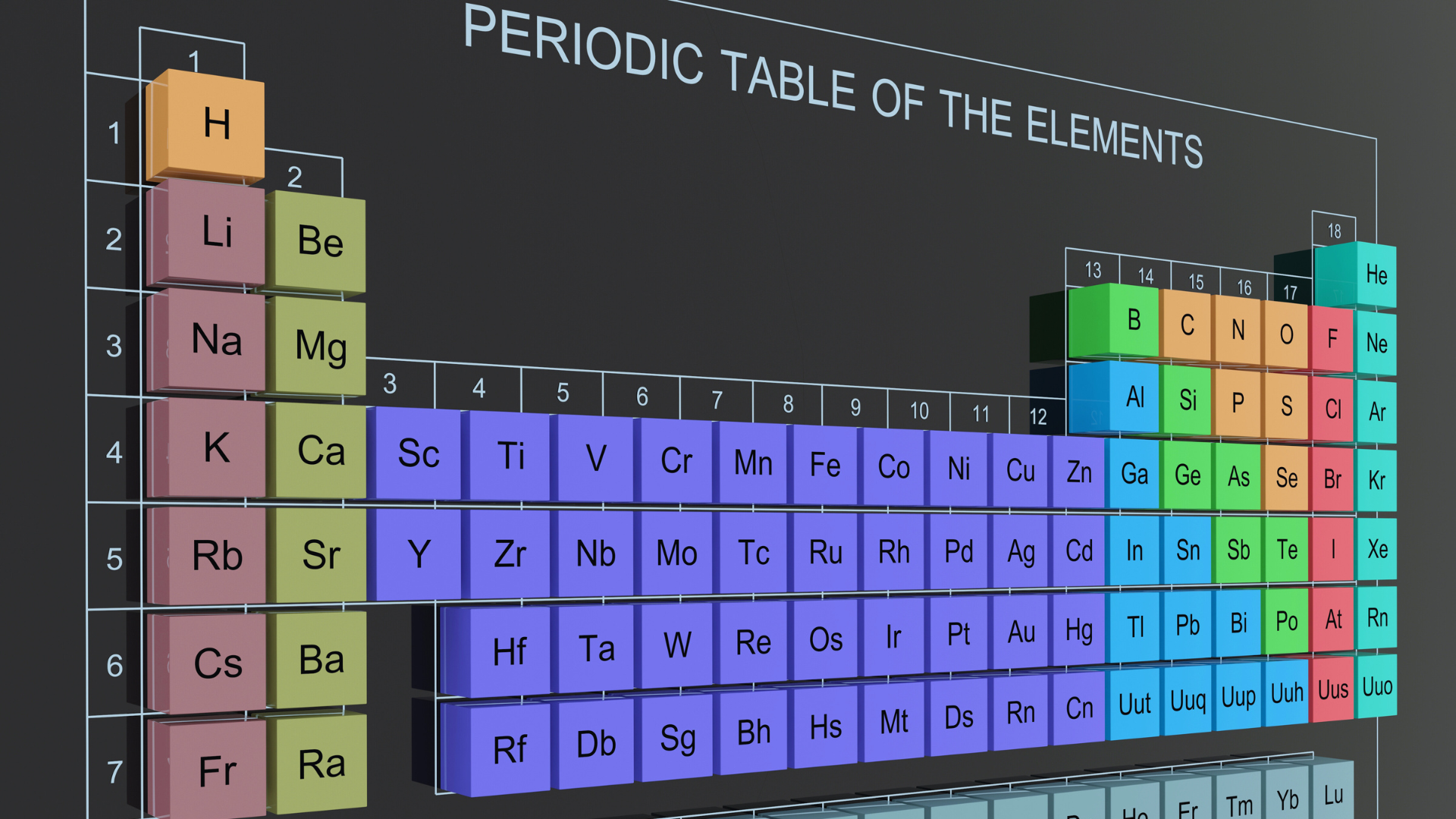
The periodic table is a systematic arrangement of all known chemical elements, organizing them based on their atomic number, electron configurations, and recurring chemical properties. It provides a framework that reveals patterns and relationships among elements, helping scientists understand the building blocks of matter and how they interact.
This organization reflects the fundamental structure of the universe, from simple atoms to complex molecules. By studying the periodic table, one gains insight into the physical and chemical behaviors that govern natural phenomena.
Understanding the periodic table is essential for fields ranging from chemistry and physics to biology and materials science. Its design allows professionals and students alike to predict element properties and their potential reactions.
How the Periodic Table Organizes the Universe
The periodic table arranges elements to reveal consistent patterns in their properties, enabling the prediction of chemical behavior. It connects the physical world through the organization of elements based on atomic structure and reactivity, reflecting fundamental principles of matter.
Fundamental Role of Elements
Elements are the basic building blocks of all matter in the universe. Each element is defined by a unique type of atom with a specific number of protons, called the atomic number. These elements combine in countless ways to form everything from stars to living organisms.
The periodic table organizes the 118 known chemical elements in an ordered layout. This order helps scientists understand the diversity of materials and the relationships between different substances. It shows how elements group together with similar properties, facilitating their study and use.
Significance of Atomic Number
The atomic number is the most important organizing principle of the periodic table. It represents the number of protons in an atom’s nucleus and determines the element’s identity. Elements increase in atomic number from left to right and top to bottom on the table.
Because the atomic number defines the structure of the atom, it controls chemical behavior and reactivity. The electron arrangement changes predictably with each increase, producing periodicity—repeating trends in element properties. This allows scientists to predict the characteristics of unknown or newly discovered elements.
Patterns and Trends in Element Behavior
The periodic table highlights patterns such as groups and periods. Groups are vertical columns containing elements with similar chemical properties. For example, alkali metals in one group are highly reactive and share valence electron configurations.
Periods are horizontal rows that show changes in atomic size, ionization energy, and electronegativity across elements. These trends reflect how elements gain or lose electrons during chemical reactions. Predicting reactivity or bonding tendencies relies on understanding these patterns within the table’s structure.
Structure and Classification of the Periodic Table
The periodic table organizes elements based on their atomic number, electron configuration, and recurring chemical properties. It arranges elements into rows and columns that reflect trends in behavior and characteristics, creating a framework for understanding elemental relationships.
Groups and Periods Explained
Groups are vertical columns, numbered 1 to 18, that contain elements with similar valence electron configurations and chemical properties. For example, Group 1 consists of alkali metals, all having one electron in their outer shell, making them highly reactive. Groups help predict element behavior in reactions.
Periods are horizontal rows that indicate the number of electron shells in an atom. Elements across a period change gradually in properties, with metals on the left and nonmetals on the right. Each period starts with an alkali metal and ends with a noble gas.
Major Families: Alkali Metals, Halogens, and Noble Gases
Alkali metals (Group 1) are highly reactive metals, soft, and have low melting points. They readily lose one electron to form +1 ions. Examples include lithium and potassium.
Halogens (Group 17) are reactive nonmetals with seven valence electrons. They gain one electron in chemical reactions, forming -1 ions. Fluorine and chlorine are familiar halogens.
Noble gases (Group 18) are inert, with full valence shells. Their stability means they rarely form compounds. Helium, neon, and argon are key noble gases used in lighting and inert environments.
Metals, Nonmetals, and Metalloids
The periodic table divides elements into metals, nonmetals, and metalloids based on physical and chemical properties. Metals, mostly on the left and center, are good conductors, malleable, and tend to lose electrons.
Nonmetals, found on the right side, are poor conductors, brittle when solid, and tend to gain electrons. Carbon, a nonmetal in Period 2, is essential to organic chemistry.
Metalloids, located between metals and nonmetals along the staircase line, exhibit mixed properties. Silicon is a common metalloid used in semiconductors. This classification aids in understanding element behavior in different contexts.
Atomic Structure, Trends, and Chemical Properties
Atoms consist of subatomic particles arranged in specific ways that dictate element behavior. The balance of protons, neutrons, and electrons influences atomic identity, mass, and interactions. Chemical properties derive largely from electron arrangement, while trends across the table reflect changes in nuclear charge and electron shells.
Protons, Neutrons, and Electrons
Protons carry a positive charge and define the element’s atomic number. Neutrons are neutral particles that add to atomic mass but do not affect charge. Electrons are negatively charged and orbit the nucleus in shells or energy levels.
The number of protons equals the nucleus’s positive charge, called nuclear charge, which attracts electrons. Neutrons vary between isotopes, changing atomic mass without altering chemical behavior. Electron count matches proton count in neutral atoms, key to electrical balance.
Electron Configuration Patterns
Electrons fill orbitals in order of increasing energy levels and shells, following rules like the Pauli exclusion principle. Electron configurations follow patterns shown in blocks (s, p, d, f) of the periodic table.
Valence electrons, found in the outermost shell, largely control an element’s reactivity and bonding. For example, elements in group 1 have one valence electron, making them highly reactive metals. The periodic table’s structure reflects recurring electron configurations across periods and groups.
Key Trends: Electronegativity, Atomic Size, and Ionization Energy
Electronegativity measures an atom’s ability to attract bonded electrons, generally increasing across a period and decreasing down a group. Atomic size decreases across a period due to higher nuclear charge pulling electrons closer, and increases down a group as new shells add distance.
Ionization energy is the energy required to remove an electron. It follows similar trends to electronegativity, rising across a period and falling down a group. These patterns link directly to the balance of nuclear charge and electron shielding effects.
| Trend | Across a Period | Down a Group |
| Electronegativity | Increases | Decreases |
| Atomic Size | Decreases | Increases |
| Ionization Energy | Increases | Decreases |
Isotopes and Atomic Mass
Isotopes are atoms of the same element differing in neutron number. This affects atomic mass but not chemical properties since electron count and proton number remain unchanged.
Atomic mass reflects the weighted average of all isotopes based on abundance. It often appears as atomic weight on the periodic table and influences calculations in chemical reactions and formula masses. Variation in isotope abundance can slightly shift atomic weight values measured experimentally.
Impact of the Periodic Table on Science and Society
The periodic table has served as a guide for scientists in numerous fields, influencing the development of technologies, medicines, and environmental solutions. Specific elements have played critical roles in shaping industries and research, highlighting how the table organizes our understanding of matter and its uses.
Advancements in Technology and Medicine
The periodic table has driven innovation in both technology and medicine by identifying elements essential for new materials and treatments. Silicon, for example, is fundamental in semiconductor technology, forming the backbone of modern electronics such as computers and smartphones.
In medicine, elements like gold and gallium are used in diagnostic tools and cancer therapies. Hydrogen’s role in organic chemistry is pivotal, enabling the synthesis of numerous pharmaceutical compounds. Scientists rely on the periodic arrangement to predict element behavior, facilitating drug development and improving medical imaging.
Environmental and Materials Science Applications
Understanding elemental properties allows scientists to develop materials that address environmental challenges. Oxygen, vital for life, is also central to combustion and pollution control technologies. Iron’s abundance and strength make it essential in construction and manufacturing, affecting resource management and sustainability.
Materials based on germanium and gallium enhance solar cell efficiency, contributing to renewable energy solutions. These applications demonstrate how the periodic table supports innovations that reduce environmental impacts and promote sustainable materials.
Notable Elements That Shaped Our World
Certain elements have had an outsized influence on history and industry. Iron revolutionized tools and infrastructure, while gold has been a symbol of wealth and a stable investment for centuries. Silicon’s role in electronics transformed communication and information technology globally.
Other elements like hydrogen, the universe’s most abundant element, are key to studying star formation and potential clean energy sources. The periodic table’s organization enables targeted study of these elements, deepening human understanding and driving progress across multiple domains.