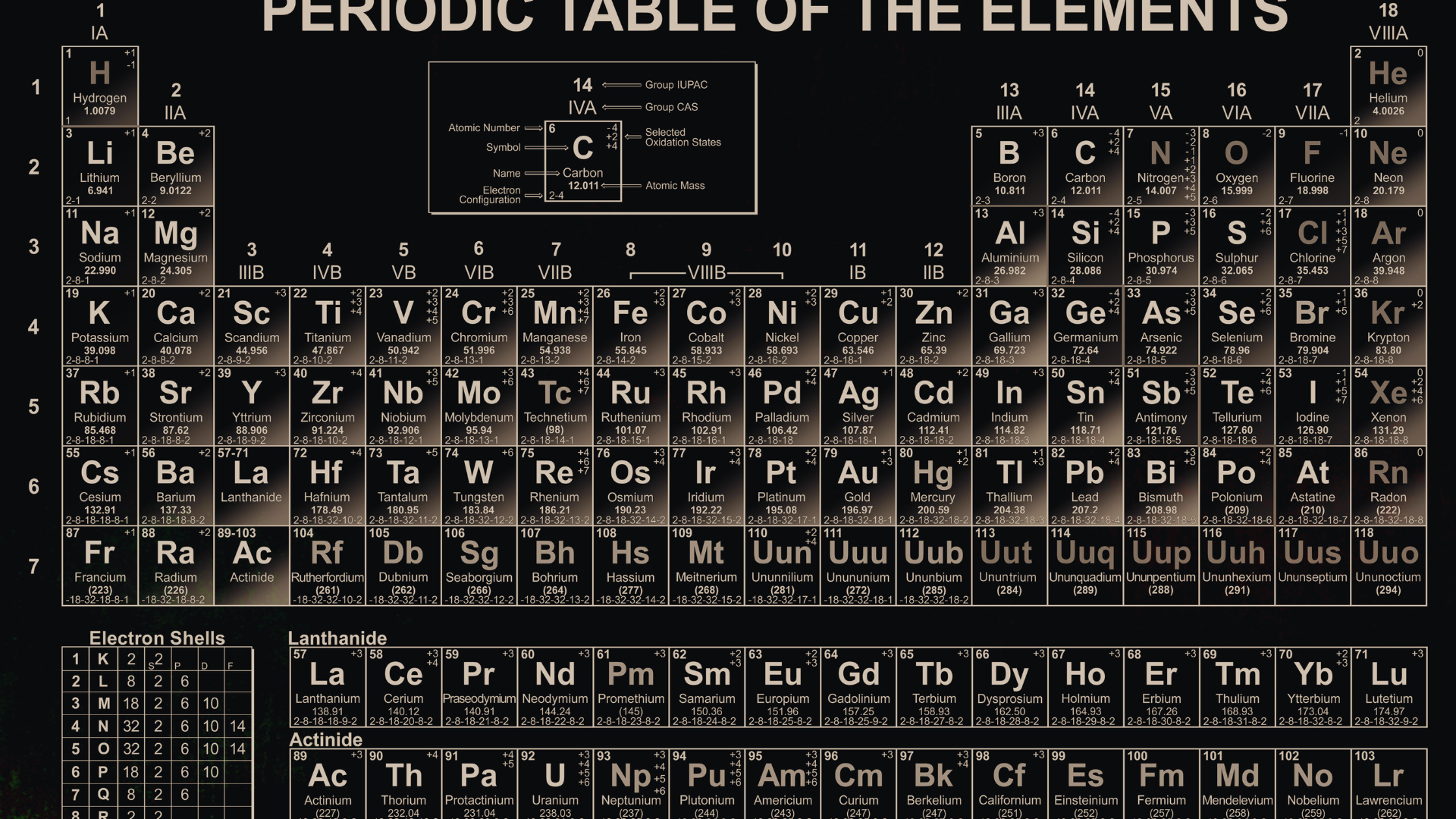
The periodic table serves as the foundation of chemistry, organizing elements based on their atomic structure and properties. Understanding the periodic table allows individuals to grasp the relationships between different elements and their behaviors in various chemical reactions. This tool was developed by Dmitri Mendeleev in the 19th century and is essential for anyone seeking to explore the world of science.
Each element is positioned according to the periodic law, which identifies patterns in their chemical properties. Recognizing these patterns can enhance comprehension of chemical bonding, reactions, and the periodic trends that influence behavior. By engaging with the periodic table, learners gain insights into the fabric of matter itself.
With a wide variety of elements spanning from hydrogen to oganesson, the periodic table invites curiosity about the elements that comprise the universe. Exploring these aspects can spark a deeper interest in chemistry and its applications in daily life.
Fundamentals of the Periodic Table
The periodic table is a systematic arrangement of elements that reflects their properties and relationships. Understanding its historical context, organization, and classification is essential for grasping its significance in chemistry.
Historical Development
The periodic table’s roots trace back to ancient Greek philosophers who sought to classify elements. Dmitri Mendeleev is credited with creating the first widely recognized periodic table in 1869. He organized elements by increasing atomic weights, forming groups with similar properties.
Around the same time, Lothar Meyer independently developed a similar table, arranging elements by atomic volume. Mendeleev’s predictions about undiscovered elements solidified his table’s acceptance. Subsequent advancements included the introduction of atomic numbers by Moseley, refining the arrangement, and addressing discrepancies in Mendeleev’s original table.
Organization and Layout
The periodic table is structured into rows called periods and columns known as groups. Each period corresponds to a new electron shell, while groups encompass elements with similar chemical properties.
The table typically displays 18 groups, including alkali metals, alkaline earth metals, transitional metals, and halogens. Atomic numbers, which represent the number of protons in an atom’s nucleus, indicate the elements’ placement. This arrangement not only highlights trends in reactivity and valence but also allows for the prediction of element behavior.
Periodic Table Classification
Elements in the periodic table are classified into metals, nonmetals, and metalloids. Metals occupy the left side, characterized by conductivity, malleability, and ductility. Nonmetals, located on the right, often exhibit contrasting properties such as brittleness and poor conductivity.
Metalloids, found between these two categories, possess mixed characteristics. The classification facilitates understanding element behaviors, helping anticipate how they will interact in various chemical reactions. This systematic categorization is key for students and professionals in chemistry.
Chemical and Physical Properties
The periodic table provides a framework for understanding the chemical and physical properties of elements. Each element’s behavior can be linked to its atomic structure and group characteristics, allowing for predictions about reactivity and properties.
Atomic Structure and Properties
Atomic structure determines an element’s properties, including its electron configuration, atomic radius, and density. The arrangement of electrons in atomic shells affects chemical behavior, influencing electron affinity and electronegativity. Elements with similar electron configurations often exhibit similar chemical properties.
The atomic radius varies across the periodic table. It tends to increase down a group due to the addition of electron shells. Conversely, it decreases across a period as protons pull electrons closer to the nucleus. These variations directly impact the melting and boiling points of elements.
Element Groups and Periodicity
Elements can be categorized into groups, each demonstrating specific chemical behaviors. For instance, alkali metals are highly reactive, while noble gases are inert. Transition metals display variable oxidation states and are often used as catalysts due to their unique electron configurations.
Halogens are highly reactive non-metals with trends in reactivity based on their position in the periodic table. As you move up a group, the nonmetallic character increases, making these elements more reactive. Understanding these group characteristics enables predictions about element interactions.
Metals, Non-Metals, and Metalloids
The periodic table is divided into metals, non-metals, and metalloids. Metals typically have high density, melting points, and hardness. They exhibit a metallic character, characterized by good electrical conductivity and malleability.
Non-metals, such as oxygen and nitrogen, have lower densities and are more likely to form covalent bonds. The nonmetallic character increases as one moves right along a period.
Metalloids, or semimetals, possess properties of both metals and non-metals. Elements like silicon show variably high melting points and moderate electrical conductivity, making them useful in electronics. Their positioning in the periodic table is pivotal for applications in technology.
Understanding Elements and Isotopes
Elements are the fundamental building blocks of matter, each possessing unique properties determined by their atomic structure. Isotopes play a crucial role in various applications, from medical imaging to environmental science.
Individual Elements and Their Idiosyncrasies
Each chemical element has a distinct atomic number, representing the number of protons in its nucleus. For instance, hydrogen (1) is the lightest and most abundant element, while helium (2) is known for its inert nature. Transition elements, like copper and gold, exhibit complex behaviors due to their electron configurations and varying valence states.
Elements from the boron group, including boron and aluminum, display unique properties and reactivities. Lanthanoids and actinoids, found in the f-block, contain 14 elements each and are characterized by their similar chemical behaviors and increasing atomic weights. Their atomic masses and configurations lead to significant industrial applications.
Isotopes and Their Significance
Isotopes are variants of elements with the same atomic number but differing mass numbers due to different neutron counts. For example, carbon-12 and carbon-14 both represent carbon but have distinct uses in dating archaeological finds and medical applications.
Some isotopes are stable, while others are radioactive, emitting radiation as they decay. Elements such as radon (86) and oganesson (118) have notable isotopes that serve in nuclear medicine and scientific research. Understanding isotopes is essential for grasping concepts like atomic mass and the behavior of elements in various nuclear reactions.
Periodic Trends and Theoretical Underpinnings
The periodic table showcases key trends that help predict element behavior based on their position. These trends stem from fundamental principles of physics and chemistry, which reveal how atomic properties interact across periods and groups.
Trends in the Periodic Table
Several important trends emerge in the periodic table. Atomic radius generally decreases across a period due to increased nuclear charge, which pulls electrons closer. Conversely, it increases down a group as additional electron shells are added.
Ionization energy, the energy required to remove an electron, tends to increase across a period and decrease down a group. This is linked to the stability of electron configurations.
Electron affinity, the energy change when an atom gains an electron, also shows periodic trends. Elements in the same group typically exhibit similar reactivity patterns. For instance, alkali metals have high reactivity, while inert gases are stable due to filled valence shells.
Theoretical Concepts in Periodicity
The behavior of elements is rooted in theoretical concepts like the Periodic Law, which states that elemental properties are periodic functions of their atomic weights.
Valency indicates how many electrons an atom can lose, gain, or share. This property is crucial in understanding chemical bonding and reactivity.
The d-block elements display unique trends due to their partially filled d-orbitals, affecting their properties and reactivity.
The International Union of Pure and Applied Chemistry (IUPAC) plays a role in standardizing these concepts, ensuring consistent communication in chemical science. Understanding these principles is essential for predicting the behavior of matter in various chemical contexts.